Adrenaline Diesel Blog
What Black Smoke, White Smoke, and Blue Smoke Actually Mean on a Diesel
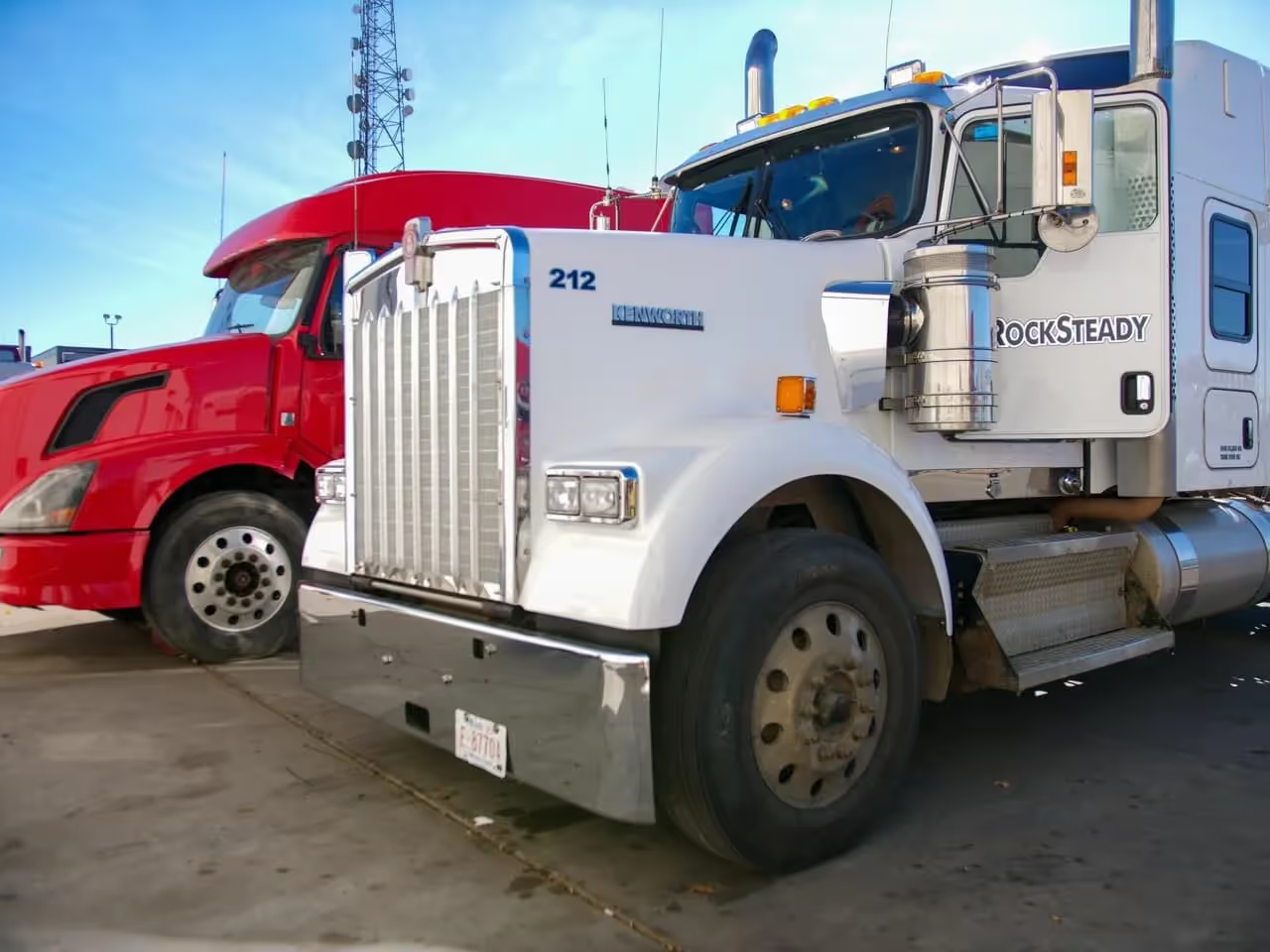
Visible diesel smoke is not a diagnosis by itself; it is a symptom. The color, thickness, odor, and operating conditions at the time it appears—such as cold start, hard acceleration, sustained high load, idle, or regeneration events—offer the most reliable clues. In modern diesel systems, those clues must be interpreted through two aspects: (1) combustion quality inside the cylinder and (2) the behavior of exhaust aftertreatment components downstream.
A practical method to assess tailpipe smoke is to consider it as “evidence of what entered the exhaust stream.” Darker smoke usually indicates carbon particles, like soot. Pale smoke often reveals unburned fuel aerosols in cold weather or water vapor/steam. Bluish smoke strongly suggests that lubricating oil is entering the combustion process or that hot exhaust is entering the combustion chamber. These categories may overlap, but they remain useful when combined with basic checks such as fluid levels, air-path inspection, fault codes, and aftertreatment status.
During the intake stroke, air enters through the intake valve while the fuel injector sprays diesel fuel, and heat from the glow plugs helps start combustion at startup. The charge is then compressed to raise temperature and pressure until ignition happens, after which exhaust gases flow through the exhaust valve. Any disruption to air flow, fuel metering, ignition delay, or cylinder sealing can leave partially reacted material that becomes visible in the exhaust.
Furthermore, modern heavy-duty diesels often rely on aftertreatment systems to reduce emissions: exhaust gas recirculation (EGR) to lower NOx by decreasing combustion temperatures, a diesel particulate filter (DPF) to capture particulate matter, and selective catalytic reduction (SCR) using diesel exhaust fluid (DEF) to convert NOx into nitrogen and water vapor. When these systems fail—or if the engine produces abnormal exhaust before the tailpipe—they can change what you see at the exhaust outlet.
Black smoke mainly comes from soot—carbon-rich particles formed when parts of the flame become fuel-heavy or lack enough oxygen. In diesel combustion, soot is closely linked to fuel-rich zones and mixing limitations, but oxidation can reduce soot if sufficient oxygen and heat are available.
In practical terms, black smoke usually indicates the engine is injecting more fuel than the available air can burn cleanly at that moment. Common causes include air intake restrictions (such as a dirty air filter), insufficient boost delivery, charge-air leaks, poor fuel atomization, incorrect timing, or mechanical damage that reduces combustion efficiency. Turbocharging effects also play a role: turbo lag can briefly delay air delivery during acceleration, which is a common cause of transient black smoke.
A key nuance is that the diesel particulate filter (DPF) is designed to physically trap diesel particulates and then remove them through regeneration. If the aftertreatment system is healthy and intact, persistent black smoke at the tailpipe is less “normal” than many drivers believe—it can indicate that the soot load is overwhelming the system, regeneration isn't happening effectively, there's an exhaust leak upstream of the filter, or the aftertreatment hardware is missing or damaged. The filter’s collected particulates are intended to be oxidized during regeneration events (either continuous or periodic), so visible soot plumes are less common during normal operation.
Regeneration is a crucial process here. As soot accumulates, control systems raise the exhaust temperature to burn off the soot. If sensors are faulty, regeneration can fail and may require manual initiation with service tools. Both the purpose of regeneration and the necessity for forced regeneration due to sensor problems are common aspects of DPF maintenance.
A disciplined workflow reduces guesswork.
White smoke from diesel exhaust is often associated with cold-start conditions, when some of the injected fuel doesn't fully combust and escapes as a visible aerosol. In technical terms, “white smoke” usually describes cold-start smoke mainly composed of unburned fuel and particles. However, white exhaust can also be water vapor or steam. It is important to distinguish “unburnt fuel haze” from “steam” because the service implications are quite different.
Cold cylinders increase ignition delay and reduce evaporation quality, especially during short trips and frequent starts. In these situations, the starting system’s heating aids—such as glow plugs—are vital because they warm the incoming charge to improve combustion. If glow plug performance drops or compression is low, the engine may misfire and push partially reacted fuel into the exhaust, creating a white plume with a strong diesel smell.
In Edmonton winters, this pattern occurs more frequently because thermal conditions are tougher and warm-up takes longer. That doesn’t mean it’s “normal” when it’s heavy or ongoing; it suggests your diagnostic threshold should be lower—especially if the smoke persists after the coolant temperature stabilizes.
Steam-like white exhaust can occur if coolant enters the cylinders or the exhaust stream. In practice, technicians look for signs such as unexplained coolant loss, cooling system pressure issues, a sweet odor, or a history of overheating. Cooling systems rely on coolant to absorb radiant heat and transfer it through the radiator; therefore, coolant condition and containment are crucial.
Cooling-system troubleshooting guidance often emphasizes inspecting leak paths and sealing interfaces (including cylinder head gasket areas) when coolant loss occurs, because both external and internal leakage routes need to be systematically identified and eliminated.
When coolant or water enters the combustion chamber and vaporizes, it can cause persistent white, steam-like exhaust, which is considered a potentially serious condition due to the risk of ongoing engine damage.
A high-value sequence is:
Blue smoke commonly indicates oil consumption—engine oil entering the combustion chamber or hot exhaust stream and burning. Diesel particulate analysis also reveals that particulate matter can contain organic components from lubricating oil, highlighting that oil ingress can influence both visible exhaust and the composition of measured particulates.
In heavy-duty diesel engines, the common entry points are:
Cold-weather operation can thicken oil and increase crankcase pressure during warm-up, which may worsen marginal turbo seal control or ventilation performance. While this does not “cause” oil burning by itself, it can expose developing faults sooner—particularly during repeated short-trip cycles.
Aftertreatment components are designed to alter exhaust chemistry and particulate loading. Exhaust gas recirculation (EGR) reduces NOx formation by lowering combustion temperature through routing cooled exhaust back into the combustion chamber. Selective catalytic reduction (SCR) decreases NOx levels by injecting diesel exhaust fluid (DEF) upstream of the catalyst to promote reactions that produce nitrogen and water vapor. A diesel particulate filter (DPF) captures particulate matter and depends on regeneration to oxidize soot.
These systems can create conditions in which an operator misreads symptoms. For instance, a truck might emit a light-colored vapor during specific thermal events distinct from the chronic smoke caused by combustion failure. Conversely, an engine that produces excessive soot due to air or fuel-side faults can overwhelm the DPF’s management system and trigger repeated regeneration cycles—raising exhaust temperatures and leading to additional issues (odors, heat, performance drops) that can distract from the original upstream problem.
A formal diagnostic approach, therefore, considers tailpipe appearance as one factor, not the final verdict. This is why modern platforms support targeted diagnostic tests such as exhaust system leak tests and air-handling/compression assessments using service tooling.
When diesel smoke shows up, record four variables before replacing any parts.
If you operate in Edmonton, include a fifth variable: ambient temperature and trip length. Short trips in cold weather put extra strain on combustion stability and aftertreatment temperature control, making operating-context notes more valuable for diagnostics.
Black, white, and blue exhaust colors are best understood as indicators of what the engine and aftertreatment are doing at a given moment. Black smoke usually indicates soot from oxygen-limited combustion or transient turbo lag. White smoke often reflects cold-start unburned fuel aerosols, but persistent steam-like white exhaust requires a coolant-loss mindset. Blue smoke strongly suggests oil ingress, often involving turbo oil control or broader oil-consumption pathways. A formal process—air path first, fluid trends always, aftertreatment status verified—consistently performs better than “colour-based guessing.”
For a technician-grade assessment in Edmonton, AB, bring your truck to Adrenaline Diesel with notes on when the smoke appears, recent fuel/oil/coolant usage, and any dash warnings—these details significantly shorten diagnostic time and help avoid unnecessary parts replacement.
Give us call or fill out our service request form to schedule your vehicle in for service at Adrenaline Diesel.

Adrenaline Diesel has extended service hours to ensure you get the best appointment time possible.

Sourcing parts for complex jobs is our specialty. We always aim for the fastest turnaround possible.


